



Republican congressman Thomas Massie has issued one of the most blunt demands yet in the wake of the latest Jeffrey Epstein document releases – and he’s not talking about more paperwork.
He wants arrests.
Speaking to the BBC in the UK, Massie said the system has failed unless those implicated are visibly taken into custody.
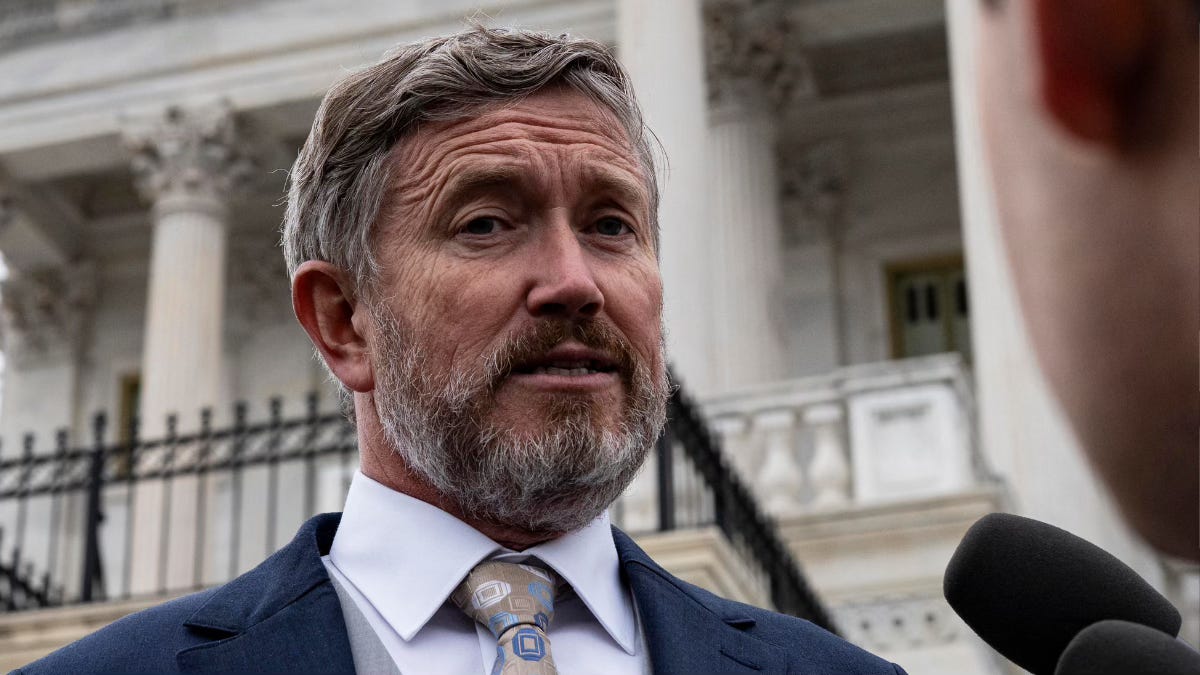
“Men need to be perp-walked in handcuffs to jail,” he said. “And until we see that here in this country… We don’t have a system of justice that’s working.”
The comments land at a volatile moment, as the U.S. Department of Justice faces growing scrutiny over what it released – and what it didn’t.
Massie has been one of the leading political voices pushing for transparency around the Epstein files, including co-writing the law that forced their release. But despite that victory, he now says the outcome has fallen short.
His central complaint is not just about redactions, but about omissions.
While DOJ officials insist they have complied with the law and only withheld material to protect victims or ongoing investigations, Massie claims key documents have been improperly shielded from public view.
The gap between what lawmakers have seen privately and what the public has received is now becoming a new battleground.
At the same time, the story has taken on a striking international dimension.
Massie pointed to the United Kingdom as the only place where tangible legal action has followed the file releases – a comparison he framed as both ironic and revealing.
“It’s ironic that [the U.S.] thought we could have more justice by becoming independent from Britain,” he said.
In the UK, Andrew Mountbatten-Windsor – formerly Prince Andrew – and Peter Mandelson were both arrested on suspicion of misconduct in public office in connection with Epstein-related investigations. Both men deny wrongdoing and have been released under investigation.
The contrast has sharpened pressure on U.S. authorities, particularly as questions grow over whether American investigators are fully cooperating with their British counterparts.
Massie made clear where he stands on that issue.
“They absolutely should,” he said, when asked whether the DOJ should share unredacted material with London’s Metropolitan Police. “And from what I’ve read, it sounds like they are sharing that.”
Still, the broader issue remains unresolved.
The law compelling the DOJ to release its Epstein files – signed by Donald Trump last year – allowed for redactions to protect victims and sensitive material. Officials have cited reasons ranging from personal medical records to graphic evidence of abuse.
Deputy Attorney General Todd Blanche said as many as three million items remain unreleased for those reasons. At the same time, Attorney General Pam Bondi insisted nothing was withheld due to “embarrassment, reputational harm, or political sensitivity.”
Massie is not convinced.
He has specifically pointed to missing documents tied to Epstein’s controversial 2008 plea deal – one of the most scrutinized elements of the entire case.
The stakes of that dispute became clearer during the same BBC programme, which brought together five survivors of Epstein’s abuse.
For Massie, their testimony reframed the entire issue.
“When you see how young they were, you realise the asymmetry of the power there,” he said.
He described a system in which Epstein moved effortlessly among presidents, billionaires, and global elites – while simultaneously exploiting vulnerable young girls.
That imbalance – power on one side, silence on the other – is what Massie says still hasn’t been properly addressed.
And until it is, he argues, document releases alone won’t cut it.
Because in his view, the real test of justice isn’t what’s printed on paper.
It’s who ends up in cuffs.